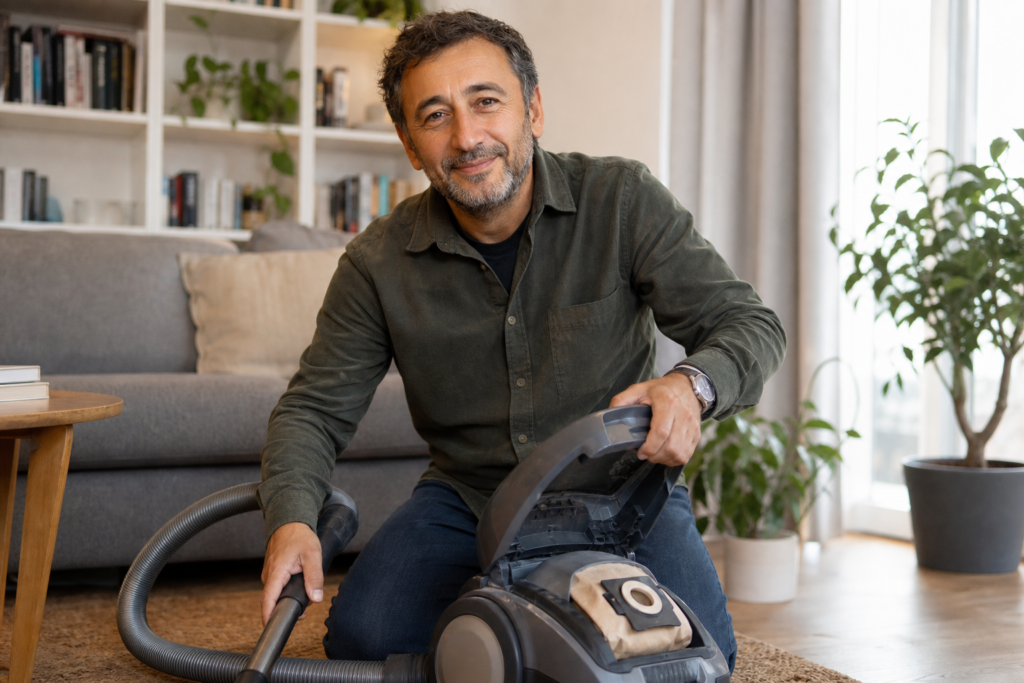

The World’s Most Advanced Silent Vacuum: Also Whispering Sweet Nothings to Your Dust Bunnies
Introduction
In today’s fast-paced world of technological marvels, the promises made by the latest gadgets are nothing short of extraordinary. We live in an age where the consumer is lured by the elusive promise of a utopian home where everything is automated, and no chore goes unfulfilled without the serenade of innovation. But at the pinnacle of this consumerist dream lies a curious commodity: the ‘silent’ vacuum cleaner. This device, we are told by a chorus of enthusiastic marketers, will perform the miraculous feat of cleaning our homes while barely rustling the air waves—because, as everyone knows, a loud vacuum might actually force you to communicate with your fellow humans.
Having previously fallen for the allure of smart home tech—tablets that cook your breakfast and refrigerators that remind you to diet—my expectations for the world’s quietest vacuum were sky-high. However, as I soon discovered, the ethereal promises of silence often fail to materialise in the symphony of day-to-day life.
The Promises of Silence
The marketing playbook for vacuum designers reads like a celestial revelation. Here we have devices that boast “silent operation,” reaching such levels of quietude that not even a cricket could pierce the stillness. It’s the height of engineering to craft a machine that makes less noise than your dinner party guests during a Brexit debate.
Yet, the irony remains as loud as a honking goose: the quieter the product’s claims, the noisier the marketing tactics. Elaborate technical diagrams impressively show how a silent vacuum’s decibel level is comparable to a whispering wood elf. Alas, that’s until it’s actually turned on, at which point its soothing hum aligns more closely with that of a jet breaking the sound barrier.
Vanity Metrics: The Dust Bunny Dilemma
Let’s address the elephant—or rather, the dust bunny—in the room: the effective vacuum that obliterates all in its path while retaining a seductive aura of quietness. Consumers prioritise ratings that declare their homes equivalent to sterile laboratories post-vacuuming. Yet, reality plays out differently when dust bunnies, emboldened by ineffective suction, perform a conga line across the living room floor.
A mock survey suggests the average home produces enough dust to sculpt a modestly-sized sculpture every fortnight—much to the chagrin of the owner’s pride. Despite these odds, the marketing mantra echoes with delight, suggesting every surface shall soon resemble pristine Alpine snow when touched by their noiseless miracle-invented piece.
The Reality Check: A Whisper and a Giggle
In a quest to validate these miracles, I spoke with real users. Maria, 34, from Surrey, swore her ‘silent’ vacuum was the best decision, aside from her labrador, Otto. “I can vacuum while Otto naps,” she claims, demonstrating the ingenuity of thinking provided by clever noise insulation. Unfortunately, Otto sleepily acknowledged otherwise, waking up startled each time the device was switched on.
Then there’s Jim, a retired engineer, who found that his high-tech vacuum took missteps akin to a clattering robot among china when confronted with any floor other than carpet. At times, Jim was tempted to don earplugs, cherishing the silence he’d been promised—a brand new exercise routine, it would seem.
Product Claims Vs. Lived Experience
It’s astounding to witness the claims made by technology companies. One avant-garde vacuum model came laden with promises not only to suck dust but to read the mind of users, anticipating when cleaning was ‘intuitively required’. Alas, whether this claim passes reality is as mysterious as the hours spent researching if it’s indeed switched on.
Real-world features often lean elsewhere; frequent complaints echo the unforeseen all-night search for docking stations due to a low battery, rendering them more decorative than functional.
The Incentives Behind Overstatements
Venture capitalists and tech influencers have tirelessly propelled these exaggerations, seeking to redefine cleanliness in the 21st century. Behind these grandiose claims stands their enigmatic leader, ‘GUY Luxurious’, epitomising the luxurious aspirations of consumers. His vision for a future where silence is golden is more than a selling tactic; it’s next-level alternate reality.
In the ecosystem of attention economics, where the loudest applause determines the winner, product transparency trails behind glamorous promises. Colorful tech exposés reduce scepticism to mere whispers, hoping no consumer raises their voice to query too loudly.
Conclusion: Embracing the Absurd
In closing, the gap between tech promises and reality often widens, not narrows. True, future releases may inch closer to utopian ideals where our vacuums don’t just clean but also offer foot massages. Until then, embracing the chaos (and the inevitable dust) seems oddly fitting.
Perhaps, instead of chasing after unattainable quietude and spotless floors, we might find joy in the dusty trails of our foibles: a tangible reminder of life as it truly happens. These are no promises, just the quiet, unfiltered truth—including a rogue dust bunny or two.